
Das Bauhaus in Weimar 1919–1925
Ein Reisekoffer: Die kleinste Bauhaus-Ausstellung der Welt geht auf Reisen durch Weimars Partnerstädte
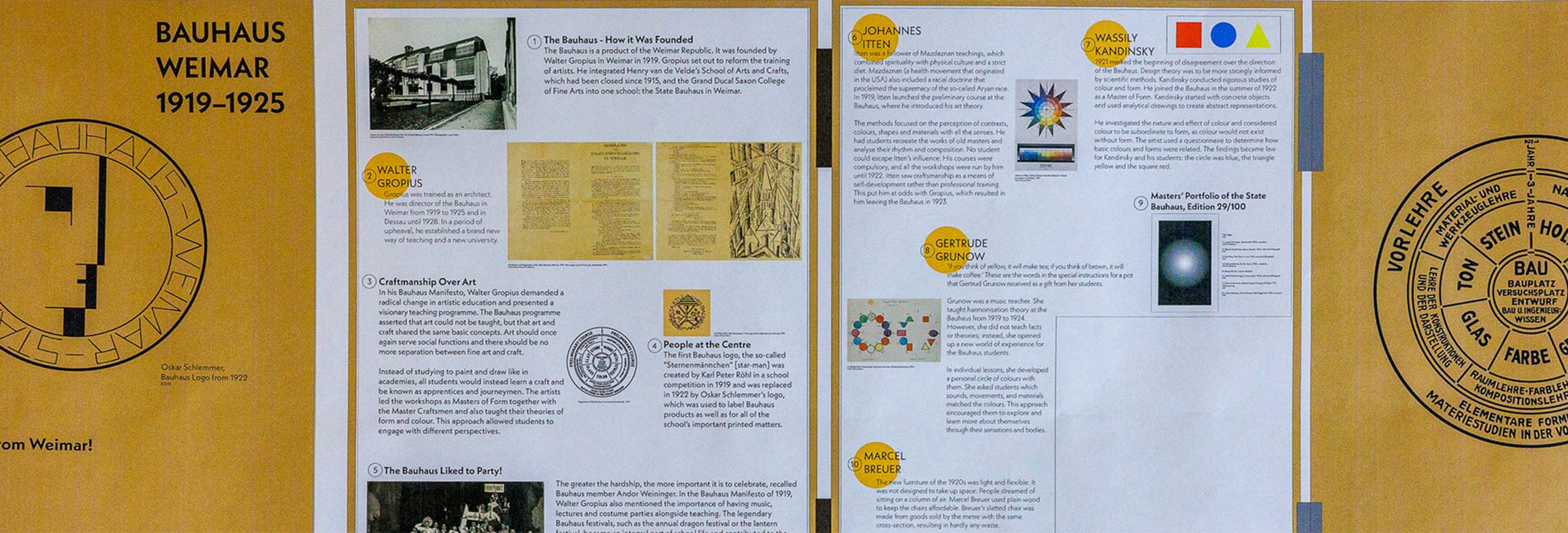
Zwischen 1919 und 1925 wurde in Weimar ein neues Kapitel der Gestaltung aufgeschlagen: Das Staatliche Bauhaus – gegründet von Walter Gropius – revolutionierte die Ausbildung von Künstlerinnen und Künstlern. Zentrale Idee war das Konzept des Gesamtkunstwerks, stellte die Verbindung von Kunst, Handwerk und Technologie in den Mittelpunkt, und verband Alltag mit Avantgarde.
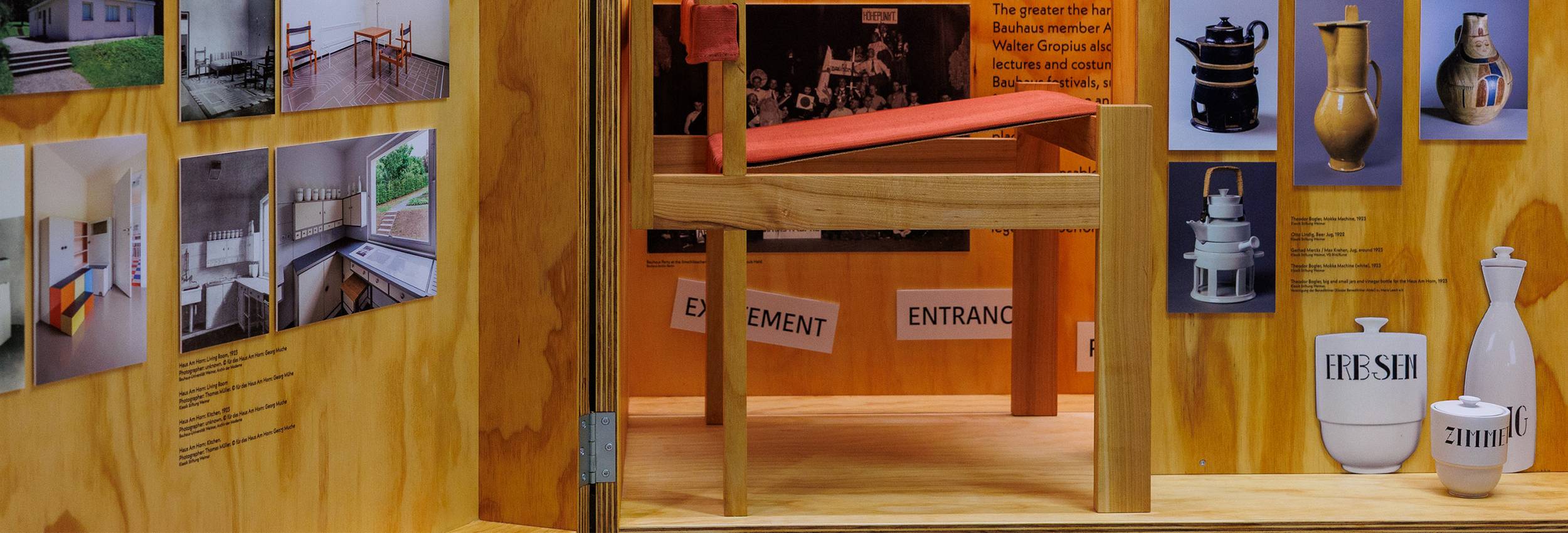
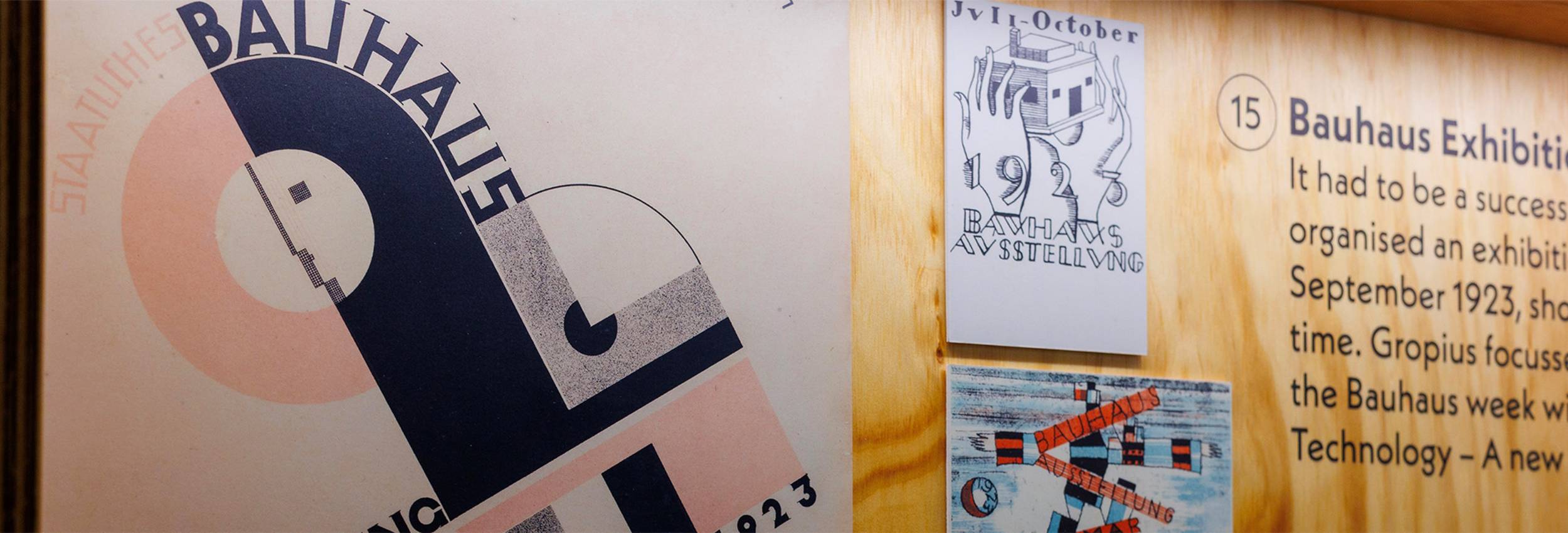
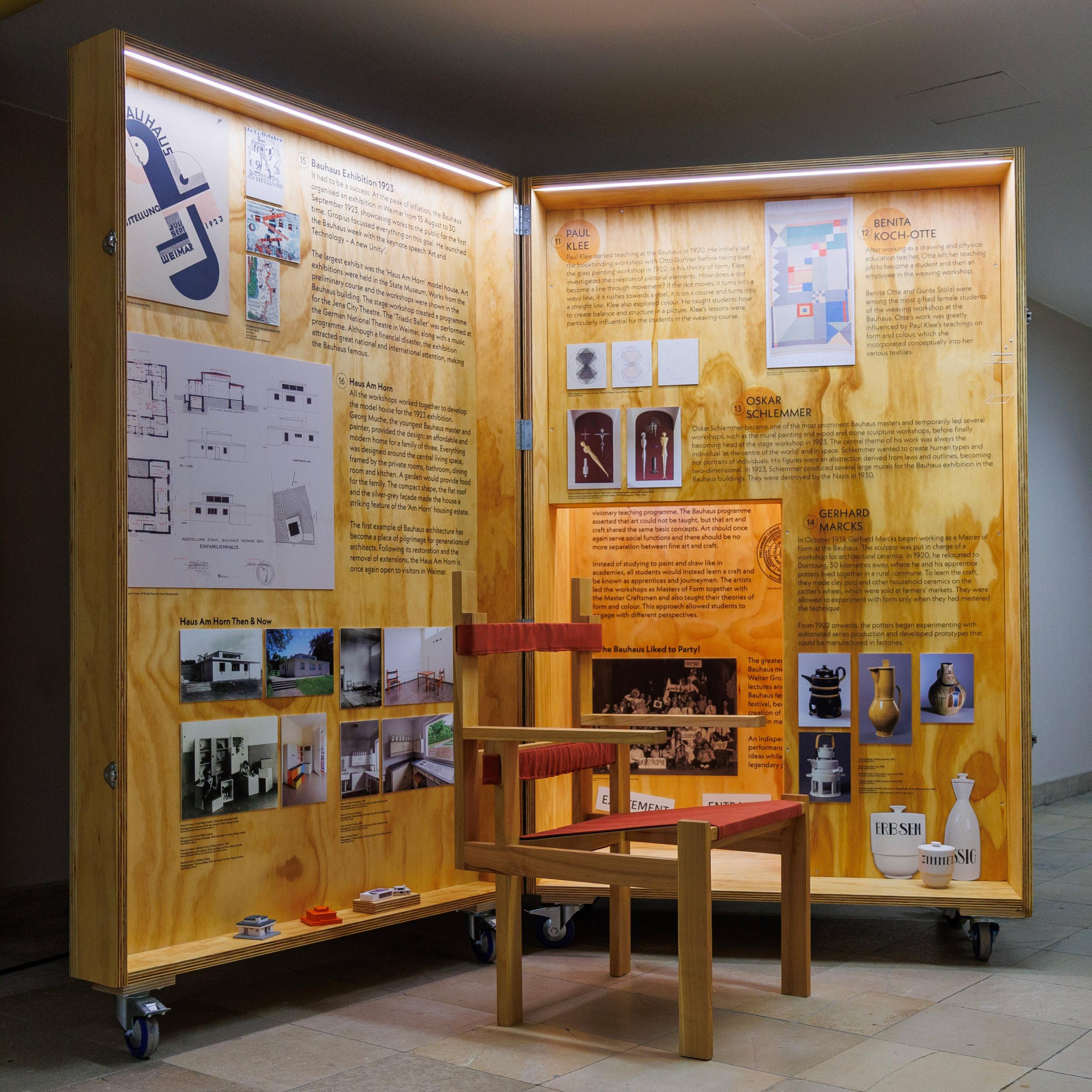
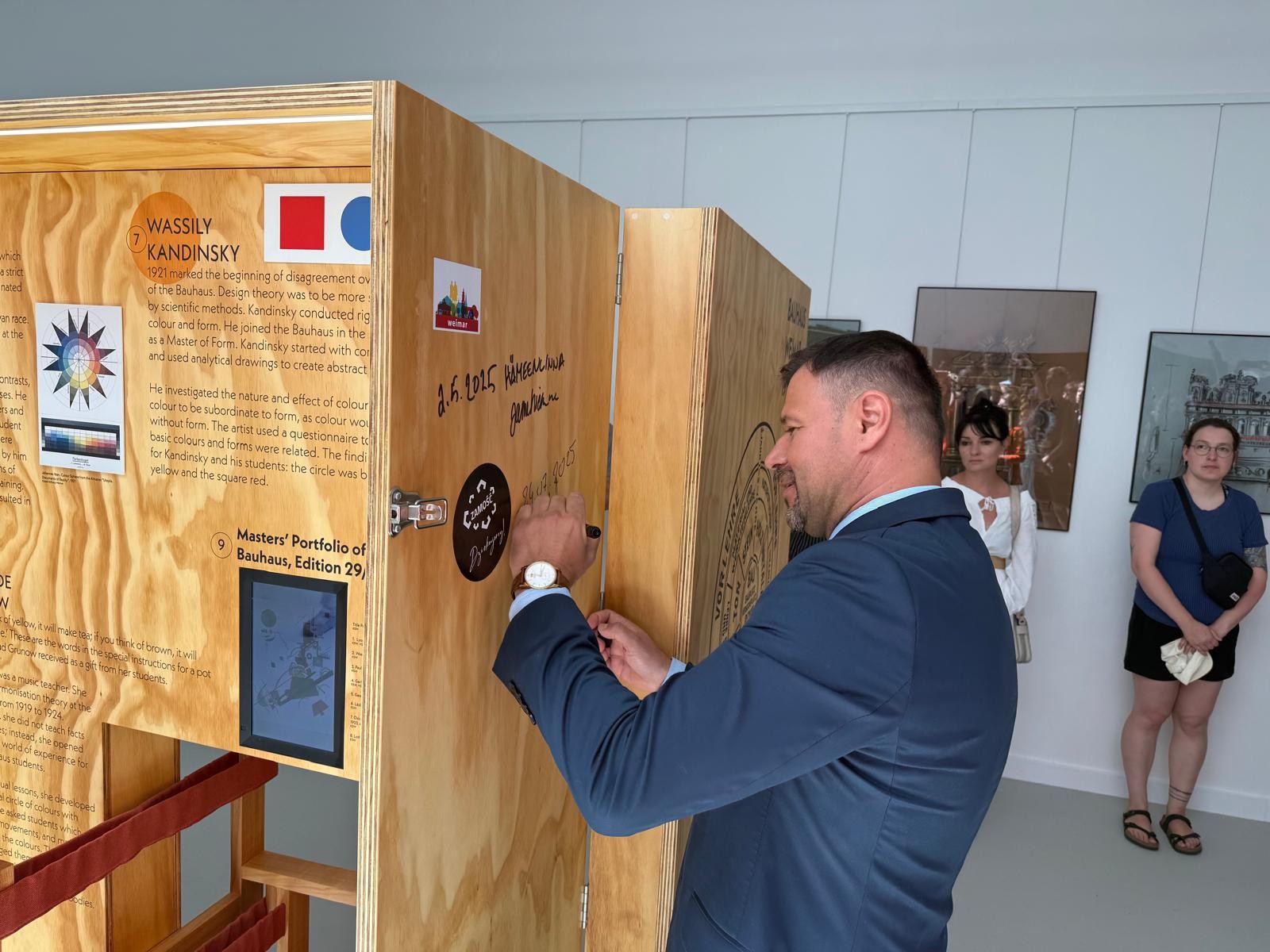
Diese mobile Ausstellung bringt die Ideen, Werke und Geschichten aus der Gründungszeit des Bauhauses in die Partnerstädte Weimars. Im Gepäck: Visionen von Gropius, Farbexperimente Kandinskys, textile Entwürfe von Benita Koch-Otte und der Geist legendärer Bauhaus-Feste. Ein Highlight ist der Nachbau des legendären Latten-Stuhls von Marcel Breuer zum Herausnehmen, auf dem die Besucherinnen und Besucher Probesitzen dürfen. Ob in Plakaten, Möbeln oder Typografie – das Bauhaus wirkt bis heute aus Weimar in die ganze Welt.
Die Stationen des Bauhaus-Koffers:
02.05. - 18.07.2025 Hämeenlinna, Finnland | 24.07. - 14.09.2025, Zamosc, Polen | 16.09. - 21.11.2025, Schowkwa, Ukraine | 01.12.2025 - 15.01.2026, Blois, Frankreich | 23.01. - 27.03.2026, Siena, Italien | vorauss. 02.04. - 22.05.2026, Trier, Deutschland
The Bauhaus in Weimar 1919–1925
The World’s Smallest Bauhaus Exhibition Goes on Tour Through Weimar’s Twin Cities
Between 1919 and 1925, a new chapter in design was opened in Weimar: The State Bauhaus – founded by Walter Gropius – revolutionised the education of artists. The central idea was the concept of the Gesamtkunstwerk (total work of art), placing the connection between art, craftsmanship, and technology at its core, and merging everyday life with the avant-garde.
This travelling exhibition brings the ideas, works, and stories from the founding period of the Bauhaus to Weimar's twin cities. Included are Gropius's visions, Kandinsky's colour experiments, textile designs by Benita Koch-Otte, and the spirit of the legendary Bauhaus parties. A highlight is the replica of Marcel Breuer's iconic slat chair, which visitors can sit on. Whether in posters, furniture, or typography – the Bauhaus continues to influence the world from Weimar to this day.
 Deutsch
  English
  Suomi
Suomi  Polski
  Українська
  Français
  Italiano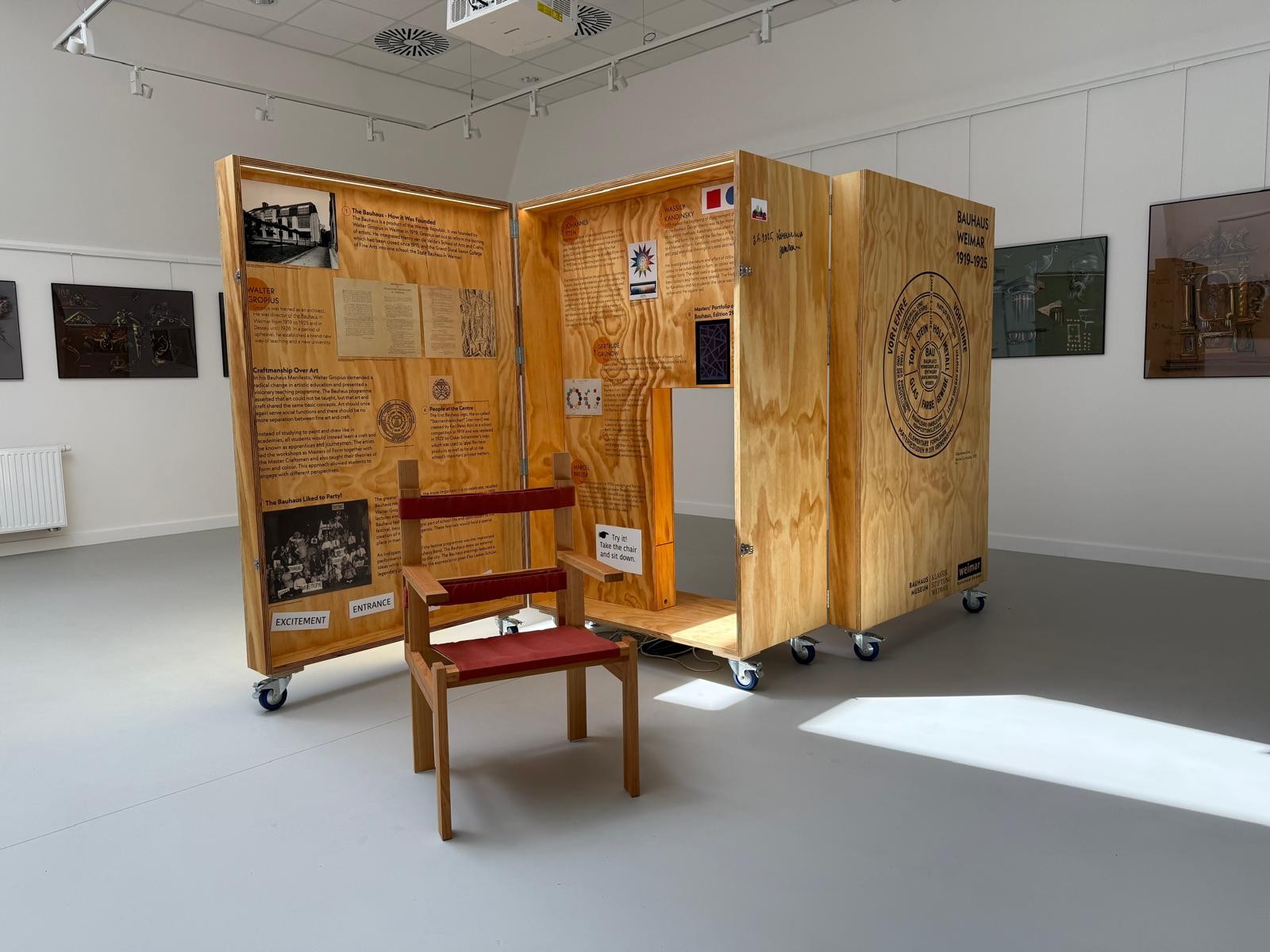
Das Bauhaus in Weimar 1919–1925
Die kleinste Bauhaus-Ausstellung der Welt geht auf Reisen durch Weimars Partnerstädte
- Veranstalter:
- Stadt Weimar
- Kuratiert von:
- Dr. Cornelia Erdmann
- Kooperation & fachliche Unterstützung:
- Klassik Stiftung Weimar, Bauhaus-Museum Weimar
(Direktion Museen Dr. Annette Ludwig, Dr. Ulrike Bestgen, Dr. Ute Ackermann) - Gefördert durch:
- Bauhaus.Weimar.Moderne. Die Kunstfreunde e.V.
Bildnachweise
Wir haben uns intensiv bemüht, alle Inhaber von Abbildungsrechten ausfindig zu machen. Personen und Institutionen, die möglicherweise nicht erreicht wurden, und Rechte an verwendeten Abbildungen beanspruchen, werden gebeten, sich mit uns in Verbindung zu setzen.